Indian Institute of Technology Madras
BS Degree Programme · Examination & Study Paper
BSMA1001 · Mathematics for Data Science I
All 2024 papers
Examination Instructions & Guidelines
- Solve on notebook/paper first before checking solutions.
- MCQ: Exactly 1 option is correct. Negative marking applies.
- MSQ: One or more options correct. Select all to score.
- NAT: Numerical response. No negative marking.
- Scientific calculator allowed for all calculations.
- Official answer key is sealed at the end of this sheet.
End Term · 22 Dec 2024 (FN)End Term
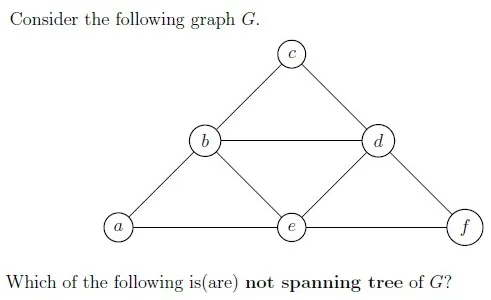
- Q1MSQ4 Marks·Choose all correct options
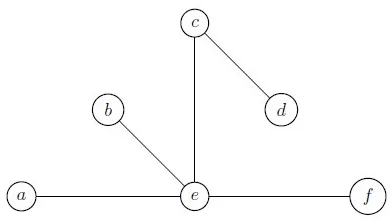
- A
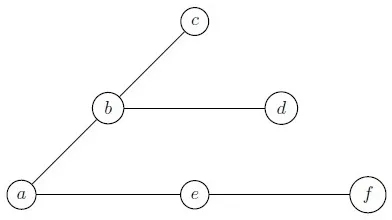
- B
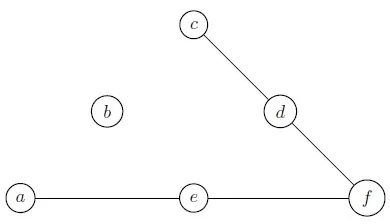
- C
- D
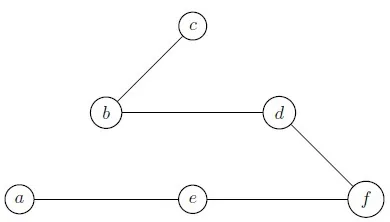
- A
- Q2MSQ4 Marks·Choose all correct options
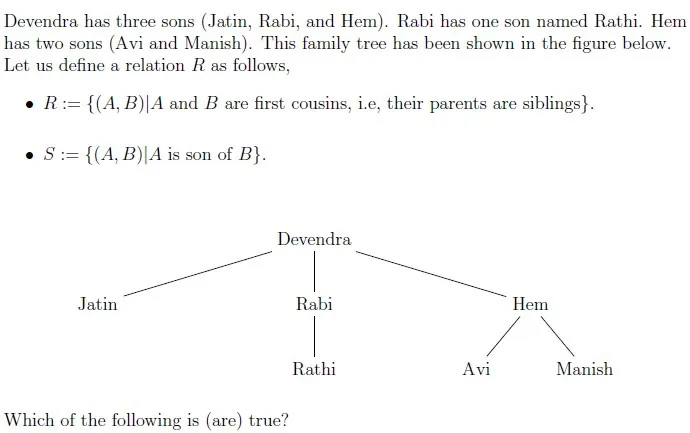
- A

- B

- C

- D

- A
- Q3MSQ3 Marks·Choose all correct options
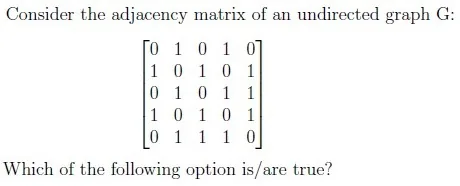
- AThe Number of edges is 8.
- BThe Number of vertices is 5.
- CThe Number of edges is 7.
- DEach vertex has degree 3.
- Q4MSQ3 Marks·Choose all correct options
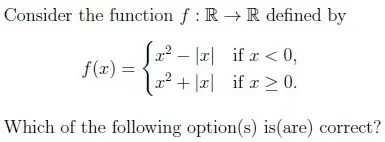
- A

- B

- C

- D

- A
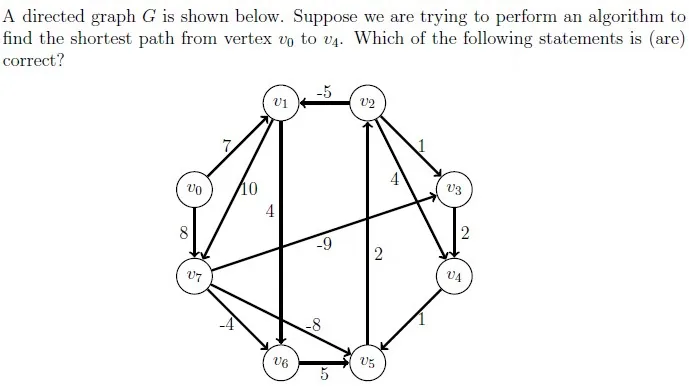
- Q5MCQ4 Marks·Choose one option
- A

- B

- C

- D

- A
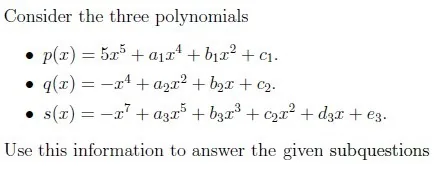
Read the passage below, then answer Q6–Q7
 Q6MCQ3 Marks·Choose one option
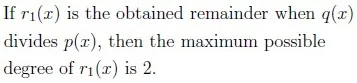
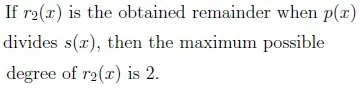
Which of the following options is/are true?
- A
- B
- C
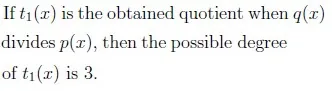
- D
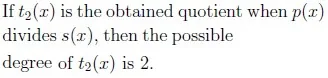
- A
- Q7MCQ3 Marks·Choose one option
Which of the following option is true?
- A

- B

- C

- D

- A
Read the passage below, then answer Q8–Q9
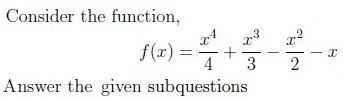 Q8NAT2 Marks·Write the number
 Your answer:
- Q9MSQ2 Marks·Choose all correct options
Which of the following option(s) is(are) correct?
- A

- B

- C

- D

- A
Read the passage below, then answer Q10–Q11

Based on the above data, answer the given subquestions.
Q10NAT2 Marks·Write the number Your answer:
- Q11NAT2 Marks·Write the number
 Your answer:
Read the passage below, then answer Q12–Q13
 Q12NAT2 Marks·Write the number
 Your answer:
- Q13NAT2 Marks·Write the number
 Enter your answer correctly to two decimal places.Your answer:
- Q14NAT5 Marks·Write the number
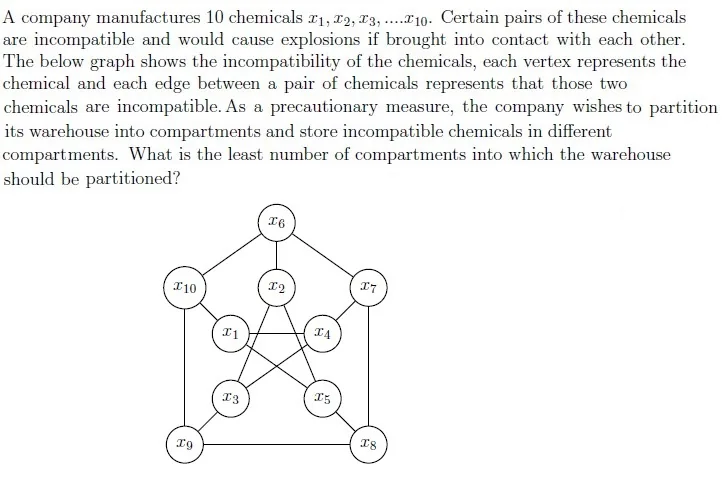 Your answer:
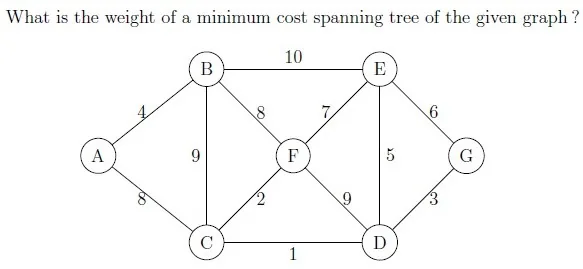
- Q15NAT5 Marks·Write the number
 Your answer:
- Q16NAT4 Marks·Write the number
 Your answer:
Qualifier · May 2024Qualifier
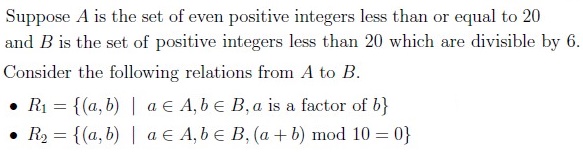
Read the passage below, then answer Q17–Q19
 Q17NAT3 Marks·Write the number
 Your answer:
- Q18NAT2 Marks·Write the number
What is the cardinality of R₁?
Your answer: - Q19MSQ3 Marks·Choose all correct options
Which of the following statements are correct?
- AR₁ is transitive.
- BR₂ is transitive.
- CR₂ is not symmetric.
- D(2,18) is an element in R₂.
Read the passage below, then answer Q20–Q21
Suppose that P₁ and P₂ are two different points in a Cartesian coordinate system, with P₁ located at (3,−2) and P₂ at (−1, 5). Let L₁ and L₂ be lines passing through P₁ and P₂ respectively.
Q20MCQ4 Marks·Choose one option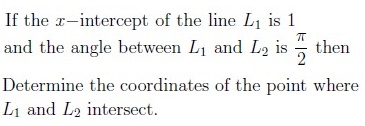
- A

- B

- C

- D

- A
- Q21MCQ4 Marks·Choose one option
If the x−intercept of the line L₁ is 1 and y− intercept of the line L₂ is -1 and If θ is the angle between L₁ and L₂, then tan θ is equal to
- A

- B

- C

- D

- A
- Q22NAT4 Marks·Write the number
A company opened recruitment for the post of data analyst. 500 candidates have applied for the post. 285 candidates are proficient in Python programming, 195 candidates are proficient in C programming, 115 candidates are proficient in Java programming, 45 candidates are proficient in Python and Java, 70 candidates are proficient in C and Python, 50 candidates are proficient in C and Java and 50 candidates don’t know any of the programming languages. Find the number of candidates who are proficient in exactly one of the three programming languages.
Your answer: - Q23NAT4 Marks·Write the number
 Your answer:
- Q24MSQ4 Marks·Choose all correct options
Consider the following polynomial p(x) whose graph is given below:-
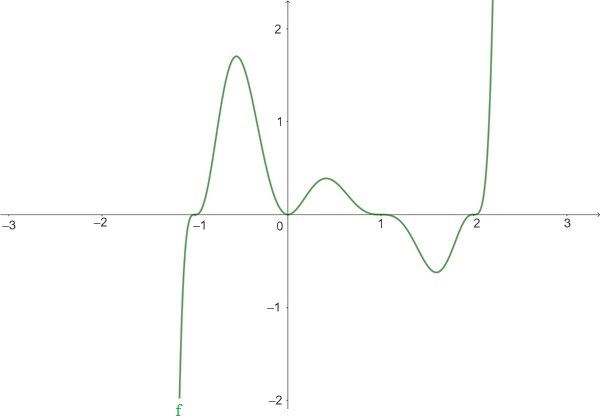 Which of the following options is/are correct?
- A

- B

- C

- D

- A
- Q25MSQ4 Marks·Choose all correct options
Consider the parabola y = x² + 4x + 12. Which of the following option(s) are true?
- AThe co-ordinates of vertex is (−8, 2).
- BThe given equation attains it minima at x = −2.
- Cy-intercept of parabola is 12.
- DThe minimum value for the given equation is 8
- Q26MSQ4 Marks·Choose all correct options

- Aq(x) is a cubic polynomial.
- Bq(x) is a quadratic polynomial.
- Cq(x) has two distinct zeros.
- Dq(x) does not have any real zeros.
- Q27MCQ4 Marks·Choose one option

- AIf b² − 4ac > 0 and a perfect square then there exists a rational root of the quadratic equation.
- BIf b² − 4ac > 0 and not a perfect square then there exists a rational root of the quadratic equation.
- CIf b² − 4ac < 0 and a perfect square then there exists a rational root of the quadratic equation.
- DIf b² − 4ac < 0 and not a perfect square then there exists a rational root of the quadratic equation.
Qualifier · January 2024Qualifier
- Q28MSQ5 Marks·Choose all correct options
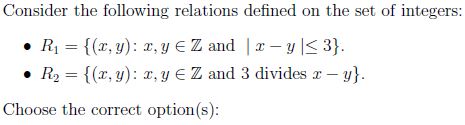
- A

- B

- C

- D

- A
- Q29MSQ5 Marks·Choose all correct options

- A

- B

- C

- D

- A
- Q30MSQ5 Marks·Choose all correct options

- A

- B

- C

- D

- A
Read the passage below, then answer Q31–Q32
 Q31NAT3 Marks·Write the number
What is the area of the triangle ABC?
Your answer:- Q32MSQ5 Marks·Choose all correct options
Choose all the possible options for P.
- A(0, 0)
- B(2, 4)
- C(−2, 4)
- D(−1, 1)
- E(1, 1)
Read the passage below, then answer Q33–Q34
 Q33MCQ3 Marks·Choose one option
Choose the point where L₁ and L₂ intersect.
- A(10, 18)
- B(5, 8)
- C(−10,−18)
- D(6, 6)
- Q34MCQ3 Marks·Choose one option
If θ is the angle between L₁ and L₂, then tan θ is equal to
- A

- B

- C

- D

- A
Read the passage below, then answer Q35–Q36
In a grocery store, 60 customers made a purchase on a specific day. 28 people bought bread, 37 people bought milk and 30 people bought fruits. All the customers bought at least one of the three items. 16 of them bought bread and fruits, 17 of them bought bread and milk and 9 of them bought all the three items.
Q35NAT2 Marks·Write the numberFind the number of customers who bought milk and fruits.
Your answer:- Q36NAT2 Marks·Write the number
Find the number of customers who bought milk and fruits but not bread.
Your answer: - Q37MSQ4 Marks·Choose all correct options
Consider the following polynomial p(x) whose graph is given below:-
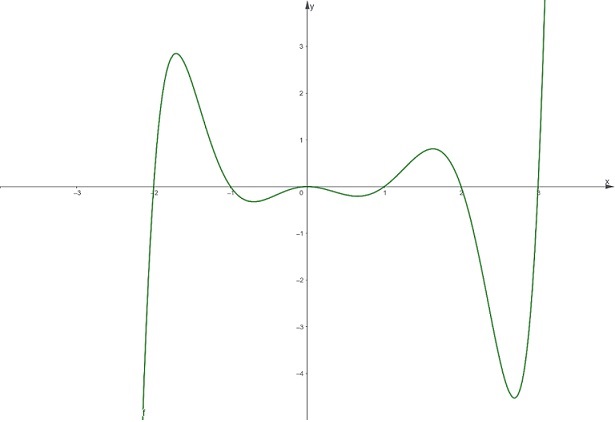 Which of the following options is/are correct.
- AMultiplicity of -1 and 1 must be same.
- Bp(x) is increasing in the interval (3,∞).
- CThe total number of local minima is 3.
- DThe number of turning points is 5.
- Q38MSQ4 Marks·Choose all correct options
Which of the following options is/are true?
- A

- B

- C

- D

- A
Read the passage below, then answer Q39–Q40
 Q39NAT2.5 Marks·Write the number
Calculate the value of A
Your answer:- Q40NAT2.5 Marks·Write the number
Calculate the value of B
Your answer: - Q41MCQ4 Marks·Choose one option
Ram and Shyam want to solve a quadratic equation. Ram made a mistake in writing down the constant term and ended up in getting roots as 3 and 4. Shyam made a mistake in writing down the coefficient of x and got the roots as 2 and 3. Consider the leading coefficient to be 1 in all cases. The correct roots of the quadratic equation are:
- A1 and 5
- B2 and 6
- C1 and 6
- D2 and 5
Official KeyMaster Answer Key & Explanations
Official answer keys from IIT Madras BS past papers. Click any question to review.
Reveal KeyCollapse Key
Master Answer Key & Explanations
Official answer keys from IIT Madras BS past papers. Click any question to review.
Detailed Answer Notes & Working
- Q17Answer: 1
- A = {2, 4, …, 20} and B = {6, 12, 18}. R₂ needs a + b to end in 0, so R₂ = {(4,6), (14,6), (8,12), (18,12), (2,18), (12,18)}. Of these, only (2,18) has a as a factor of b. So R₁ ∩ R₂ = {(2,18)} and its cardinality is 1.
- Q18Answer: 9
- B = {6, 12, 18}. For b = 6, a can be 2 or 6. For b = 12, a can be 2, 4, 6 or 12. For b = 18, a can be 2, 6 or 18. So |R₁| = 2 + 4 + 3 = 9.
- Q19Answer: A, C, D
- Being a factor is transitive (a divides b and b divides c means a divides c), so R₁ is transitive. R₂ = {(4,6), (14,6), (8,12), (18,12), (2,18), (12,18)}. (2,18) and (18,12) are in R₂ but (2,12) is not, so R₂ is not transitive. (4,6) is in R₂ but (6,4) is not, so R₂ is not symmetric. 2 + 18 = 20, so (2,18) ∈ R₂.
- Q20Answer: D
- L₁ passes through (3,−2) and (1,0), so its slope is −1 and L₁ is y = −x + 1. L₂ is perpendicular, so it has slope 1 through (−1,5): y = x + 6. Solve −x + 1 = x + 6 to get x = −5/2 and y = 7/2. The point is (−5/2, 7/2).
- Q21Answer: B
- L₁ through (3,−2) and (1,0) has slope m₁ = −1. L₂ through (−1,5) and (0,−1) has slope m₂ = −6. tan θ = |(m₁ − m₂)/(1 + m₁m₂)| = |(−1 + 6)/(1 + 6)| = 5/7.
- Q22Answer: 325
- 450 people know at least one language (500 − 50). 450 = 285 + 195 + 115 − 45 − 70 − 50 + x gives x = 20 who know all three. Exactly one = (sum of singles) − 2 × (sum of pairs) + 3x = 595 − 330 + 60 = 325.
- Q23Answer: 23
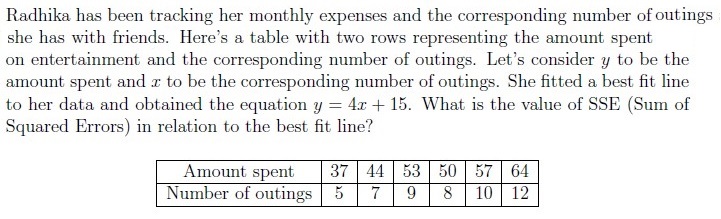
- Predicted y = 4x + 15 gives 35, 43, 51, 47, 55, 63 for x = 5, 7, 9, 8, 10, 12. The actual values give errors 2, 1, 2, 3, 2, 1. SSE = 4 + 1 + 4 + 9 + 4 + 1 = 23.
- Q24Answer: B, C
- The graph crosses at −1, 1 and 2 with a flat shape, so these roots have odd multiplicity (3 or more), but they need not be equal. After x = 2 the graph goes up forever, so p(x) is increasing on (2, ∞) and p(x) → ∞ as x → ∞. There are only 4 turning points, not 5.
- Q25Answer: B, C, D
- y = x² + 4x + 12 = (x + 2)² + 8. So the vertex is (−2, 8), the minimum is at x = −2 and the minimum value is 8. At x = 0, y = 12, so the y-intercept is 12. The vertex is not (−8, 2).
- Q26Answer: B, C
- The zeros 1/2 and 5 come from (2x − 1)(x − 5). The other zeros 2 and 3/5 must come from q(x). So q(x) = k(x − 2)(5x − 3), which is a quadratic with two distinct real zeros.
- Q27Answer: A
- The roots are (−b ± √D)/2a with D = b² − 4ac. If D > 0 and D is a perfect square, √D is an integer, so both roots are rational. If D < 0 there are no real roots at all, so options C and D are false.
- Q28Answer: A, D
- R₁ is reflexive (|x − x| = 0) and symmetric (|x − y| = |y − x|). It is not transitive: (0,3) and (3,6) are in R₁ but |0 − 6| = 6 > 3. R₂ means x and y leave the same remainder on division by 3, which is reflexive, symmetric and transitive. So R₂ is an equivalence relation and R₁ is not.
- Q29Answer: A, C
- |x² − 4| is defined for every real x, so f is defined on all of ℝ. f(2) = f(−2) = −1, so f is not one-one. |x² − 4| takes every value from 0 upward, so the range of f is [−1, ∞) and the minimum value is −1, not 0.
- Q30Answer: B, C, D
- Both p and q have degree 5 with leading coefficient −1. So p(x) → −∞ and q(x) → −∞ as x → ∞. A degree 5 polynomial has at most 4 turning points. Since the degrees and leading terms match, q(x) ÷ p(x) gives the constant quotient 1.
- Q31Answer: 2
- A(4,3) and C(8,3) both lie on y = 3, so base AC = 4. B(2,2) is 1 unit below that line, so the height is 1. Area of ABC = 1/2 × 4 × 1 = 2.
- Q32Answer: D, E
- Area of PAB must be 2/4 = 1/2. Area = 1/2 |4(2 − t²) + 2(t² − 3) + t(3 − 2)| = 1/2 |−2t² + t + 2|. So |−2t² + t + 2| = 1, which gives t = 1, −1/2, 3/2 or −1. With P = (t, t²), the options that work are (1, 1) and (−1, 1).
- Q33Answer: C
- Intercept form: L₁ is x/2 − y/3 = 1, or 3x − 2y = 6. L₂ is −x + y/2 = 1, or y = 2x + 2. Put this y in L₁: 3x − 4x − 4 = 6, so x = −10 and y = −18. The point is (−10, −18).
- Q34Answer: A
- From the intercepts, slope of L₁ = 3/2 (x-intercept 2, y-intercept −3) and slope of L₂ = 2 (x-intercept −1, y-intercept 2). tan θ = |(2 − 3/2)/(1 + 2 × 3/2)| = (1/2)/4 = 1/8.
- Q35Answer: 11
- Every customer bought something, so 60 = 28 + 37 + 30 − 16 − 17 − x + 9, where x is the number who bought milk and fruits. This gives 60 = 71 − x, so x = 11.
- Q36Answer: 2
- First, milk and fruits = 11 (from 60 = 28 + 37 + 30 − 16 − 17 − x + 9). Remove the 9 people who bought all three items: 11 − 9 = 2 bought milk and fruits but not bread.
- Q37Answer: B, C
- The roots are −2, −1, 0, 1, 2 and 3, and the graph rises after x = 3, so p is increasing on (3, ∞). The local minima are near −0.6, 0.6 and 2.7, so there are 3. There are 6 turning points, not 5. The roots −1 and 1 only need odd multiplicity, so they need not be the same.
- Q38Answer: C, D
- For y = x² + 2x − 5, slope = 2x + 2 = 10 gives x = 4 and y = 16 + 8 − 5 = 19, so the point is (4, 19), not (4, 17). The axis of x² + 4x + 5 is x = −2, not 2. Two different equations can share discriminant and roots, e.g. x² − 3x + 2 = 0 and −x² + 3x − 2 = 0 (both D = 1, roots 1 and 2).
- Q39Answer: 2
- The slope of y = Ax² + Bx + C at x is 2Ax + B. At x = 3: 6A + B = 16. At x = 2: 4A + B = 12. Subtract the two equations: 2A = 4, so A = 2.
- Q40Answer: 4
- The slope of y = Ax² + Bx + C at x is 2Ax + B. From 6A + B = 16 and 4A + B = 12 we get A = 2. Then B = 12 − 4A = 12 − 8 = 4.
- Q41Answer: C
- Ram has the wrong constant but the right x coefficient, so the sum of roots = 3 + 4 = 7. Shyam has the wrong x coefficient but the right constant, so the product of roots = 2 × 3 = 6. The equation is x² − 7x + 6 = 0, with roots 1 and 6.